Blog
Converting a Full US Recipe to Grams, Step by Step
Converting a recipe is not one multiplication — it is a short audit. Every ingredient converts by its own density, a few units are traps in disguise, and eggs are best left out of grams entirely. This is the order that gets it right.
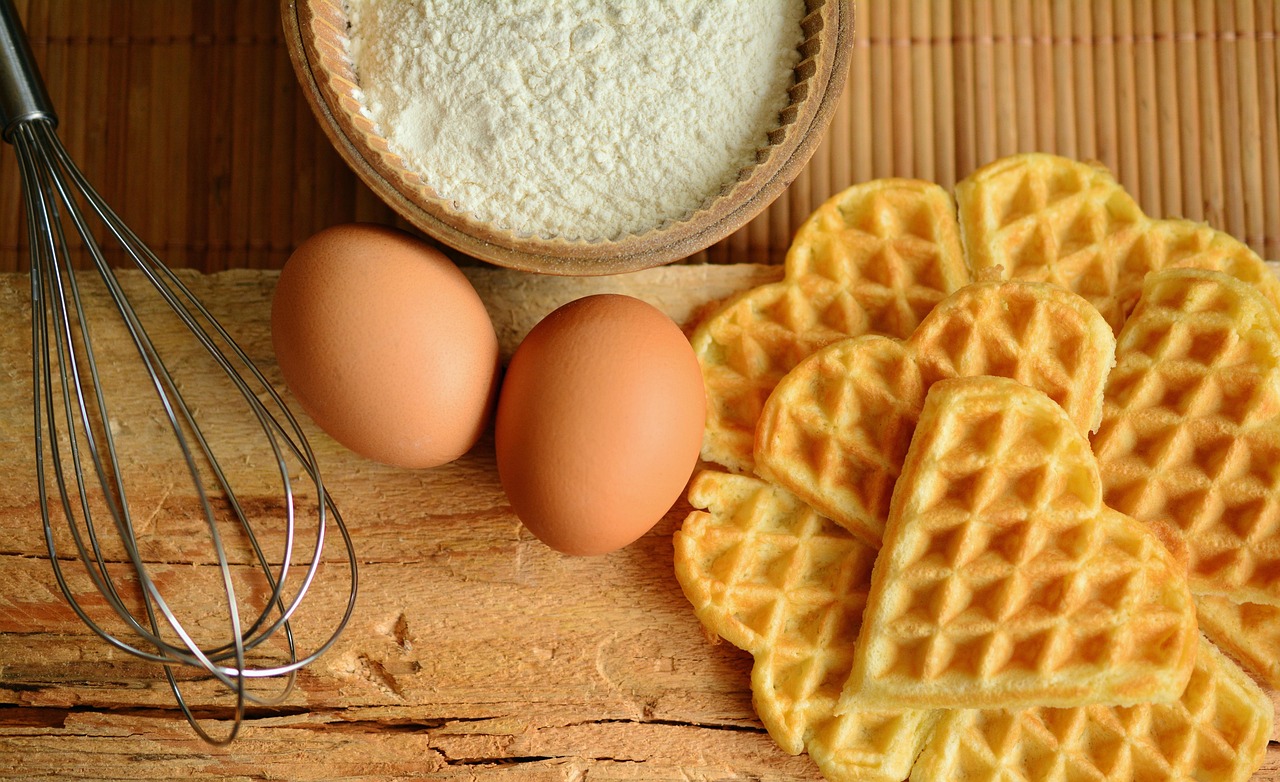
Step one: inventory every ingredient
List everything the recipe calls for, with its unit: cups, tablespoons, teaspoons, sticks, pieces, ounces. Two lines deserve care before you start — « packed » brown sugar measures differently from loose, and « sifted » flour differently from flour you sift afterward. Rewrite the list the way the recipe means it before converting anything.
Step two: find out which cup the recipe means
A US cup is 236.6 ml, a metric cup 250 ml, an imperial cup 284.1 ml — the same word for three sizes. Most American recipes and food blogs assume the first; Australian and newer metric cookbooks the second. In all-purpose flour the gap is 125 g versus 132 g per cup: check where the source comes from before multiplying.
Step three: convert by density, not by one magic number
Grams equal volume times density — and density belongs to the ingredient, not the cup. Multiply each line by its own figure:
- All-purpose flour (0.529 g/ml): 125 g per US cup
- Granulated sugar (0.845): 200 g
- Brown sugar, packed (0.93): 220 g
- Powdered sugar (0.53): about 125 g
- Butter (0.959): 227 g — exactly two sticks
- Honey (1.42): 336 g
The traps that survive conversion
Sticks are easy: one stick is 113 g, half a cup, eight tablespoons. Spoons are subtler — a US tablespoon is 14.79 ml against the metric 15 ml, negligible in a teaspoon of vanilla but worth noticing on a tablespoon of baking powder in a tripled recipe. And cups of liquids are nearly interchangeable at 236 versus 250 ml for milk or water, their densities staying within 3 % of water.
Keep eggs out of the conversion
Eggs are counted, not weighed: « 2 eggs » means two eggs, and a large one runs about 50 g without the shell — consistent enough that converting to grams adds a precision the recipe never had. Size is the only real variable: US large matches EU size M-L at roughly 50 g. If you scale a custard where the yolk carries the structure, note the weight; otherwise let eggs be eggs.
Sanity-check the result like a recipe, not a sum
Read the converted recipe back: does the flour-to-liquid ratio look like the batter you know? A three-cup cake should land near 375 g of flour against roughly 250 ml of milk. If the numbers feel wrong, recheck the cup convention and whether the brown sugar was packed. Or skip the arithmetic — GramKitchen's converters apply each ingredient's density, variance included, for you.