Blog
Flour Types Have Different Weights: 96 g to 149 g per Cup
Every flour has its own density. A US cup of almond flour weighs about 96 g; the same cup of white rice flour holds 149 g — more than half again as much. Swapping cup for cup silently rewrites the recipe.
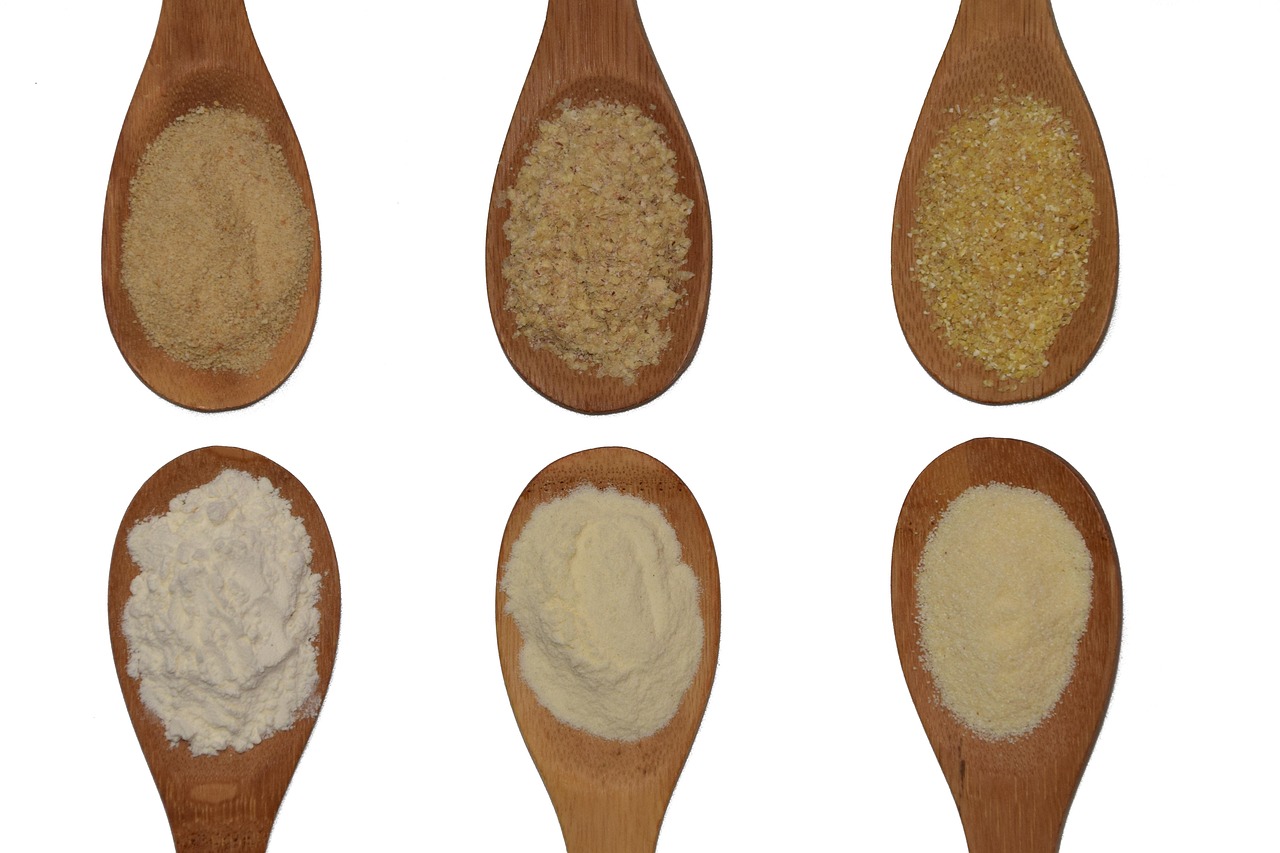
Same cup, six different weights
Measured densities vary enough that « one cup of flour » spans a 55 % range depending on what is in the jar.
- Almond flour (0.406 g/ml): about 96 g per US cup
- Cake flour (0.482): about 114 g
- Whole wheat flour (0.507): about 120 g
- All-purpose flour (0.529): about 125 g
- Bread flour (0.537): about 127 g
- White rice flour (0.63): about 149 g
Why the densities differ
Almond flour is ground nuts — oily, coarse particles that trap air and settle loosely. Rice flour is fine, compact starch that packs tight. Between them sit the wheat flours, ordered roughly by milling fineness: silky cake flour at the light end, protein-rich bread flour at the heavy end.
What a cup-for-cup swap really changes
Replace all-purpose flour with rice flour, cup for cup, and you add about 19 % more dry ingredient; swap it for almond flour and you remove about 23 %. Those are not rounding errors — they change the flour-to-liquid ratio the recipe was balanced around, before the gluten question even comes up.
Substitutions are written in grams, not cups
The substitution ratios between flours are all 1:1 — by weight. Whole wheat replaces all-purpose gram for gram, but the data carries a caveat: expect a denser result and add about 10 % more liquid. Cake flour swaps 1:1 for a more tender crumb, bread flour 1:1 for a chewier one; a gluten-free blend works at equal weight but wants a binder like xanthan if the blend lacks one.
Fill variance adds a second layer
Each flour also carries its own fill tolerance: ±8 % for all-purpose, cake and bread flours, ±9 % for whole wheat and rice, ±10 % for almond flour. Two cooks measuring the same cup of the same almond flour can still land nearly 20 % apart — convention and technique stacked on top of density.
The reliable method
Weigh flour in grams and convert each type by its own density — that is what the ingredient pages on this site do. When you change flour, keep the grams constant first, then adjust hydration to the dough you see — not to a cup that was never the same volume twice.