Blog
How to Scale a Recipe Up or Down Without Breaking It
Multiply the flour, divide the caution. Most ingredients scale in a straight line — the ones that do not are exactly the ones that decide whether the recipe works.
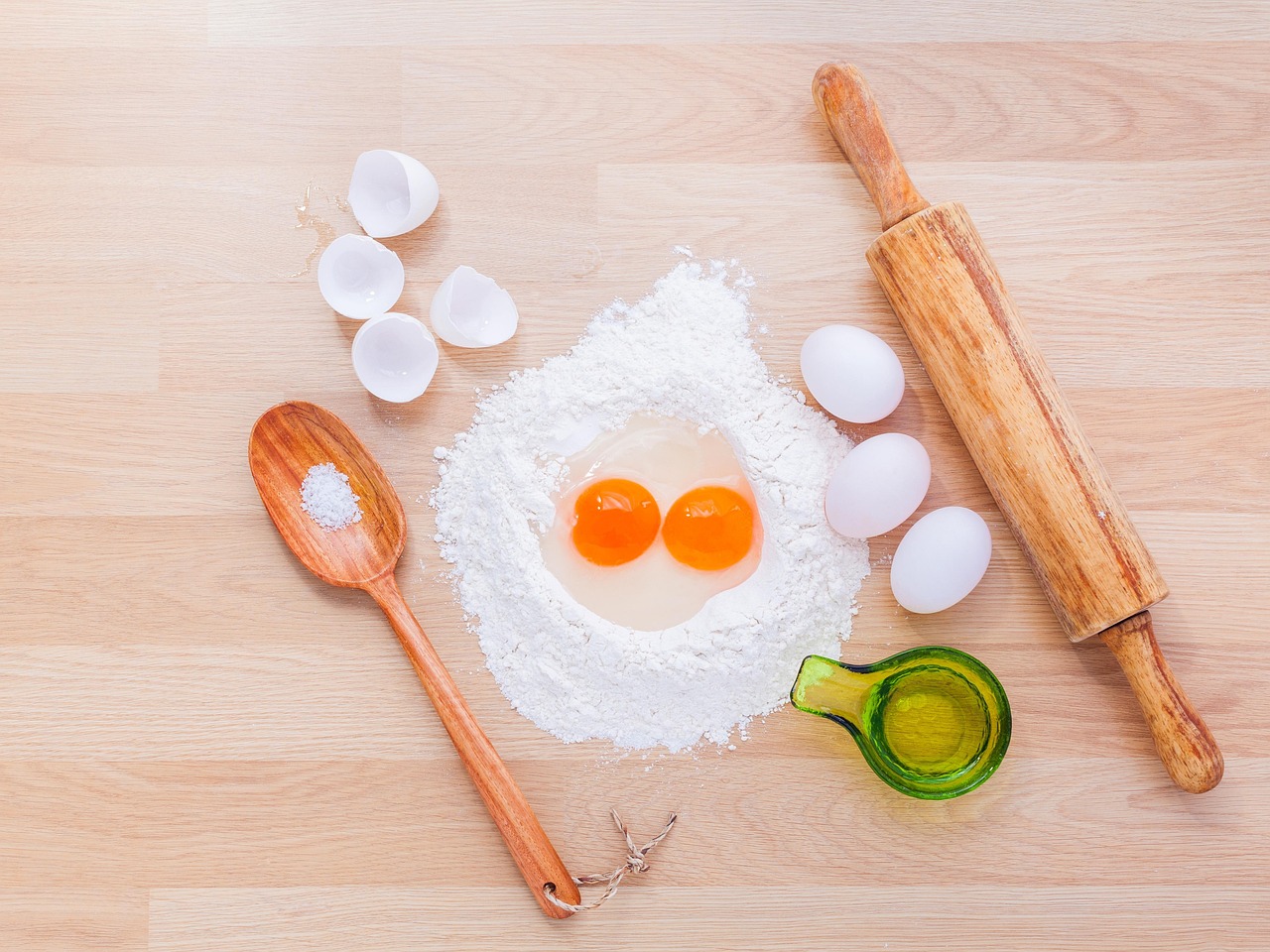
Start by converting everything to grams
Scaling is arithmetic, and arithmetic is only clean in a single unit. A cup of flour is 125 g; two cups is 250 g; three eighths of a cup is a headache. Weigh each ingredient once, multiply by your factor, and the recipe scales in a straight line — flour, sugar, butter and liquids double and halve without complaint.
Eggs come in whole units
A large egg weighs about 50 g and refuses to come in halves. Halving a three-egg cake leaves you chasing an egg and a half: beat one egg and weigh out 25 g of it. For bigger batches the same trick applies — think in grams of beaten egg rather than in eggs, and the arithmetic works again.
Seasonings and leaveners scale on a curve
The palate does not read double the chili as twice as hot — it reads it as more. For salt, spices and strong flavorings, start at about three quarters of the linear amount when doubling, taste, then top up. Chemical leaveners deserve the same restraint: doubling the baking powder in a doubled cake risks a soapy, over-aerated crumb, so bakers keep it slightly under the line. Yeast runs on its own clock: a larger dough mass ferments faster per gram, so big batches want proportionally less yeast or a cooler rise.
The pan decides baking time, not the factor
Baking time tracks the depth of the batter, not its total volume. Double a cake into a pan with twice the surface and each portion bakes in about the original time; squeeze that same doubled batch into the original pan and you have doubled the depth — the center needs far longer, usually at a lower temperature. Match the pan area to the batter volume: same depth means the same bake.
Cooking forgives what baking does not
A doubled soup, stew or curry really is just double — evaporation is the only trap, so hold back some liquid and salt until the end. Baking is chemistry: the ratios between flour, fat, sugar and leavener set the structure, which is why the non-linear ingredients above matter there and barely matter in a pot of chili.
A workflow that holds at any factor
The reliable sequence is always the same.
- Convert every ingredient to grams
- Multiply by the factor — no rounding yet
- Round to kitchen-sensible numbers (whole eggs, spoon fractions)
- Hold salt and spices to about three quarters, then adjust to taste
- Pick the pan for batter depth and judge doneness by cues — a clean skewer, the wobble, the color — not by the original clock