Blog
Metric vs US Cups: Why American Recipes Misfire Abroad
« Two cups of flour, one cup of milk » hides two separate errors in a metric kitchen: a cup that is not 250 ml, and a dry ingredient whose weight depends on its density.
Two cups are not the same cup
A US cup holds 236.6 ml; the metric cup used in Europe, Australia and most of the world holds 250 ml — about 6 % more. Liquids forgive that gap; dry ingredients amplify it. Filled with all-purpose flour (density 0.529 g/ml), a US cup weighs about 125 g while a 250 ml glass holds about 132 g — before anyone packs it down.
Spoons drift too — but barely
A US tablespoon is 14.79 ml against the metric 15 ml, and a teaspoon 4.93 ml against 5 ml — a gap of about 1.4 %, trivial next to the cup's 6 %. What catches readers is the assumption that one cup « obviously » means 250 ml: the recipe silently means 236.6 ml — 6 % less.
The real error is density, not volume
Even translated perfectly into millilitres, a cup stays a volume. Its weight depends on what fills it — and generic « 1 cup = 240 g » charts hide that completely.
- All-purpose flour (0.529 g/ml): about 125 g per US cup
- Granulated sugar (0.845 g/ml): about 200 g
- Honey (1.42 g/ml): about 336 g — nearly triple the flour
What 6 % does to a cake
A reader measuring « 2 cups » in a 250 ml glass already adds 6 % more of everything. Scoop the flour instead of spooning it — a fill variance of ±8 % — and the flour can run about 15 % high while the liquid stays near target. More flour against unchanged fat and liquid is exactly the recipe for a dry, dense crumb.
Ounces split in two as well
American recipes mix volume ounces and weight ounces without saying which: a fluid ounce is 29.57 ml, a weight ounce 28.35 g — equal only for water. And watch the classic rounding: a pound is 453.6 g, not 500. Treating a 500 g block of butter as « one pound » overshoots by 10 %.
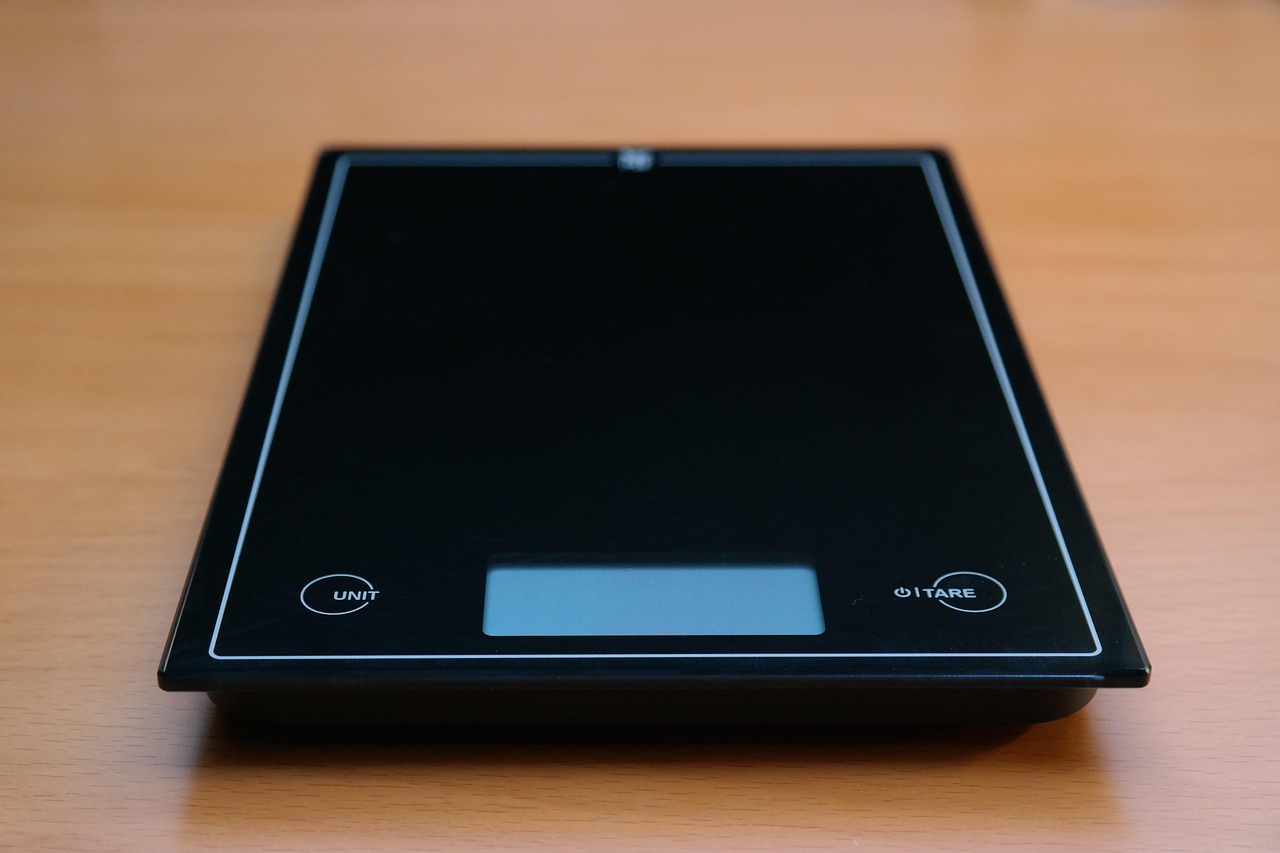
The fix: weigh once, in grams
Grams are the same in every kitchen on earth. Convert the recipe once with each ingredient's real density — every converter on this site does exactly that — write the gram weights on the card, and the metric-vs-imperial problem disappears along with the cups.